


Introduction
In the nonprofit sector, maintaining financial integrity is crucial for building trust with donors, stakeholders, and the community. Implementing robust internal controls is essential to prevent fraud, ensure financial accuracy, and promote operational efficiency. In this blog, we will explore the importance of internal controls for nonprofits and provide practical tips for effectively establishing and maintaining these controls.
Why Internal Controls Matter

Preventing Fraud
Fraud can have devastating consequences for nonprofits, including financial loss, damaged reputation, and eroded trust. Internal controls help detect and prevent fraudulent activities by establishing checks and balances that safeguard the organization’s assets.
Ensuring Financial Accuracy
Accurate financial reporting is vital for making informed decisions, maintaining donor confidence, and complying with regulatory requirements. Internal controls ensure that financial transactions are recorded correctly and that financial statements provide a true and fair view of the organization’s financial position.
Promoting Operational Efficiency
Internal controls streamline processes, reduce errors, and enhance accountability. By clearly defining roles and responsibilities, internal controls help ensure that tasks are completed efficiently and that resources are used effectively.
Complying with Regulations
Nonprofits must adhere to various legal and regulatory requirements, including tax laws, grant conditions, and reporting standards. Internal controls help ensure compliance with these requirements, reducing the risk of penalties and legal issues.
Key Internal Controls for Nonprofits
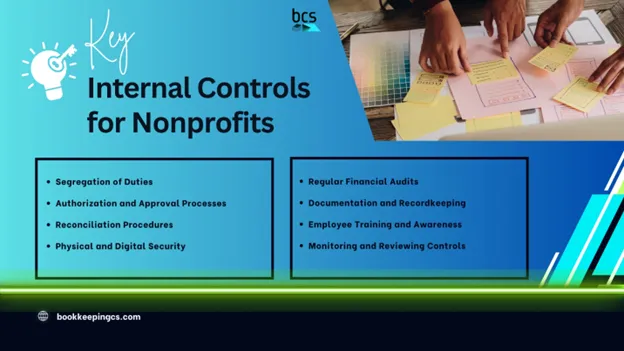
Segregation of Duties
Segregation of duties involves dividing responsibilities among different individuals to reduce the risk of errors and fraud. Key tasks, such as authorizing transactions, recording transactions, and handling assets, should be performed by separate individuals.
Authorization and Approval Processes
Establish clear policies for the authorization and approval of financial transactions. Require multiple levels of approval for significant expenditures and ensure that only authorized personnel can initiate transactions.
Reconciliation Procedures
Regularly reconcile financial records, such as bank statements, to identify discrepancies and ensure accuracy. Reconciliation helps detect errors, omissions, and unauthorized transactions promptly.
Physical and Digital Security
Implement measures to protect both physical and digital assets. This includes securing cash and valuable items, using password-protected systems, and ensuring that sensitive information is accessible only to authorized personnel.
Regular Financial Audits
Conduct regular internal and external financial audits to assess internal controls’ effectiveness and identify areas for improvement. Audits provide an independent review of financial records and processes, enhancing accountability and transparency.
Documentation and Recordkeeping
Maintain thorough and accurate documentation of all financial transactions. Proper recordkeeping ensures that there is a clear audit trail, making it easier to verify transactions and resolve any discrepancies.
Employee Training and Awareness
Educate employees about the importance of internal controls and their role in maintaining financial integrity. Regular training sessions can help ensure that staff understand and adhere to established policies and procedures.
Monitoring and Reviewing Controls
Regularly monitor and review internal controls to ensure they remain effective and relevant. Adjust controls as needed to address new risks, changes in operations, or regulatory requirements.
Practical Tips for Implementing Internal Controls

Conduct a Risk Assessment
Identify potential risks and vulnerabilities within your organization’s financial processes. This assessment will help prioritize areas that require the most robust internal controls.
Develop Clear Policies and Procedures
Create comprehensive policies and procedures that outline internal control measures. Ensure these documents are easily accessible to staff and regularly updated to reflect changes in operations or regulations.
Foster a Culture of Accountability
Promote a culture of accountability where staff understand the importance of internal controls and feel responsible for upholding them. Encourage open communication and provide a safe environment for reporting concerns.
Use Technology Wisely
Leverage technology to enhance internal controls, such as using accounting software with built-in controls, implementing secure access controls, and utilizing automated reconciliation tools.
Involve the Board of Directors
Engage the board of directors in overseeing internal controls. The board should regularly review financial reports, approve significant transactions, and ensure that internal controls are effective and adhered to.
Conclusion
Implementing robust internal controls is essential for preventing fraud, ensuring financial accuracy, and promoting operational efficiency in nonprofits. By establishing clear policies, segregating duties, and regularly monitoring controls, nonprofits can safeguard their assets, maintain donor trust, and achieve their missions effectively.
At BCS, we are dedicated to helping nonprofits develop and implement effective internal controls. Our expertise ensures that your organization remains financially sound, compliant, and transparent.